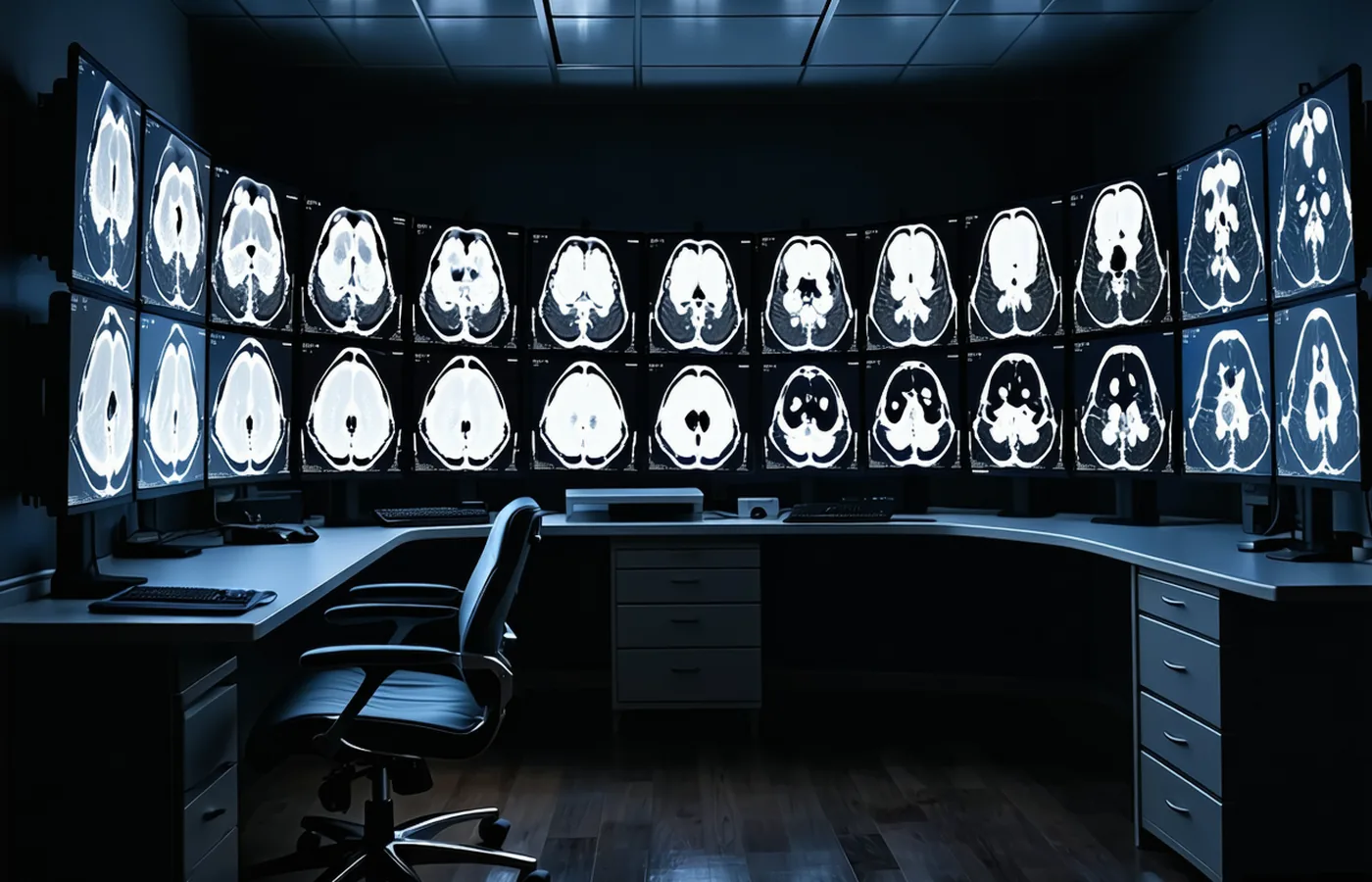
Radiology AI — Chest CT Annotation
The scan arrives pre-read. You confirm.
Neurmorph pre-annotates chest CT scans before the radiologist opens them — flagging nodules ≥2mm, measuring in 3 planes, estimating density and growth rate. The read becomes a confirmation, not a 40-second search.
Radiologists read 70+ scans a day. Every minute of hunt time is a minute of diagnostic time lost.
A busy radiology department processes hundreds of chest CTs daily. On each study, the radiologist spends 25–40 seconds just locating the finding, placing calipers, pulling up the prior, and filling in boilerplate report fields — before any diagnostic judgment begins.
That's 30–45 minutes of a 6-hour session spent on mechanical steps. Neurmorph is not a triage alert tool. It doesn't interrupt the workflow with notifications. It pre-annotates every scan quietly so the measurements are already there when the radiologist opens the viewer.
Neurmorph eliminates: Locate finding + Measure
PACS integration. No installation. Annotations waiting before you open the viewer.
New study queued in your existing PACS or RIS — no workflow change.
AI analyzes the series, identifies findings, measures dimensions, estimates density and growth rate from prior comparables.
Radiologist opens the viewer. Callout boxes, measurements, and a brief finding summary are already placed on the relevant slices.
Accept, adjust, or dismiss each annotation. Report generates with pre-filled structured data.
Built for the chest CT reader. Expanding to MRI and abdomen.
From the reading room.
The 2mm nodule was already circled when I opened the chest CT. I confirmed, adjusted the measurement by 0.3mm, moved on. That case took me 4 minutes instead of 8.
We process 340 chest studies on a busy Tuesday. Getting Neurmorph to pre-screen before overnight reads meant our overnight radiologist caught two incidental aortic findings that are easy to miss when you're fatigued and 200 studies deep.
Drops into your existing stack. No new viewer, no IT project.
Neurmorph connects via DICOM DIMSE or DICOMweb. Sends DICOM SR back to your PACS. No HL7 integration required for basic operation. Typical deployment: 2-hour IT session.