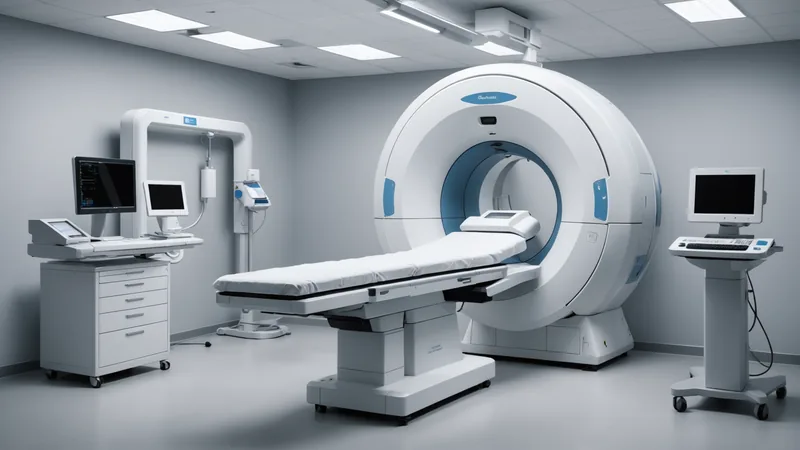
Low-dose CT lung cancer screening volumes in the United States have been climbing steadily since the US Preventive Services Task Force expanded eligibility criteria in 2021, reducing the minimum age from 55 to 50 and broadening the pack-year threshold. The result is a larger eligible population, a multi-year program expansion at hospitals and imaging centers, and a set of departments that in many cases tripled their LDCT volume over three to four years without adding proportional radiology reading capacity.
The 12% year-over-year growth figure is an estimate drawn from aggregate imaging market data and department-level conversations — it is not a single-source statistic, and the number will vary significantly by market, population demographics, and how aggressively a given institution has pursued LDCT program enrollment. Some imaging centers in underserved markets that were early adopters of the expanded criteria are seeing growth rates above 20%. Others with already-mature programs are closer to 6–8%. The direction is consistent: up.
What a Growing LDCT Program Looks Like Inside a Department
Consider a community radiology department that processed 1,800 LDCT chest studies in 2022. At 12% annual volume growth, that number reaches approximately 2,500 by 2024 and approaches 3,100 by late 2025. The radiologist FTE count in the same department may have increased by zero over that period — or by one part-time hire. The arithmetic is straightforward: each of the four or five full-time radiologists in the department is reading 20–30% more LDCT studies annually than they were three years ago, stacked on top of every other modality volume that is also growing.
The per-case read time for an LDCT study is not short. A clean negative with no nodules of consequence might take 4–5 minutes. A study with three or four nodules requiring individual Fleischner assessments, prior comparison, and Lung-RADS assignment — a nodule-complex study — takes 12–15 minutes. As program enrollment matures, the proportion of nodule-complex studies tends to increase: the initial screening round generates many first-time detections, and subsequent annual rounds generate larger cohorts of patients with existing nodules requiring follow-up measurement. The follow-up studies take longer to read than clean negatives.
The combined effect is that per-radiologist LDCT read time in a growing program increases faster than raw volume growth suggests. A 12% increase in studies may produce a 15–18% increase in total radiologist time commitment, depending on how the mix of initial screens versus follow-ups evolves.
The Workforce Pipeline Problem
The general radiology workforce shortage is well documented in the literature and in healthcare workforce planning discussions. Graduating radiology residents are distributed across a large number of subspecialties, and thoracic radiology — the primary skill set for LDCT reading — does not see the same fellowship volumes as neuroradiology or interventional radiology. Community hospitals and growing imaging centers that lack the academic cachet to attract fellowship-trained thoracic radiologists depend on general radiologists cross-trained in chest reading, who are themselves in high demand.
The locum tenens and teleradiology markets have absorbed some of this slack, but at cost. Teleradiology read rates for LDCT studies are substantially higher per study than in-house radiologist cost accounting, and building a program that depends heavily on external read capacity creates coordination and quality consistency challenges. Lung nodule management programs benefit from institutional consistency — the same reader, or at least the same institutional protocol, reviewing a patient's annual scans for the 3–5 years a nodule is in active surveillance. Rotating teleradiology coverage makes that continuity difficult.
We are not saying teleradiology is a poor solution — it serves an important function, particularly for overnight coverage and rural market access. We are saying that for a lung screening program specifically, the clinical preference is institutional continuity, and the workforce shortage pushes against that preference.
Where the Gap Shows Up in Practice
The workforce-volume gap does not typically manifest as a single dramatic failure. It manifests as a slow degradation of process quality across several dimensions:
Lung-RADS completion rate. LDCT screening programs that bill under CPT codes 71271 (LDCT) and G0297 (LDCT counseling) require structured Lung-RADS reporting for reimbursement. When reading volume exceeds comfortable read capacity, structured reporting completion is the first thing that suffers — not because radiologists deliberately skip it, but because the additional time required to complete a structured template (versus dictating a free-text report) becomes hard to justify when the queue is backed up. Incomplete structured reporting creates reimbursement risk and reduces the program's ability to track its own performance over time.
Prior comparison quality. Meaningful LDCT interpretation requires prior comparison. A nodule that was 5mm last year and is 5mm this year has different clinical implications than a nodule that was 3.5mm last year and is 5mm this year. When radiologists are under time pressure, prior pull and comparison steps get abbreviated. The radiologist may review the prior report's text rather than actually measuring the prior nodule image — a practice that introduces error when prior reports used different measurement conventions or when nodule location is ambiguous.
Incidental finding follow-up. LDCT studies produce incidental findings at a meaningful rate — adrenal nodules, aortic aneurysm screening opportunities, coronary calcium, hepatic lesions. In a time-pressured read environment, incidental finding documentation and follow-up recommendation rates drop. This is a clinical quality issue with longer-term consequences that don't show up in TAT metrics but affect patient outcomes downstream.
How Pre-Annotation Changes the Arithmetic
The reason Neurmorph started with chest CT annotation — specifically nodule detection, measurement, and prior comparison — is that this is exactly where the volume-capacity gap is most acute. Each of the three quality degradation patterns described above connects to steps that pre-annotation can directly support:
For Lung-RADS structured reporting: if the nodule measurements and Lung-RADS category are already pre-populated in the structured report when the radiologist opens the case, the time cost of completing the structured template drops from 2–4 minutes to 30–60 seconds of review and confirmation. The structured report becomes something the radiologist verifies rather than constructs.
For prior comparison: automated prior retrieval and registered growth rate calculation removes the most time-consuming manual step in nodule follow-up reads. The radiologist sees the delta presented when they open the case — prior measurement, current measurement, growth rate, Fleischner category implication. The clinical judgment about significance is still theirs; the data assembly is done.
For incidental finding documentation: Neurmorph's current scope is nodules, pleural effusion, and mediastinal contour. It does not currently flag adrenal or hepatic incidentals — that is on our development roadmap, and we are explicit on our product page that chest CT is our current focus with expansion coming. What we can say is that reducing the time spent on nodule annotation gives the radiologist more attention bandwidth for the non-nodule findings that require their judgment rather than automation.
The Honest Version of This Conversation
We want to name something directly: the 12% volume growth and the workforce gap are structural forces that pre-annotation tools alone will not resolve. Even if every LDCT department deployed a pre-annotation tool tomorrow, the underlying imbalance between screening program growth and radiologist supply would remain. The structural solution is a combination of workforce pipeline investment, training program expansion, and policy decisions about who can interpret screening studies that are beyond the scope of any software company to influence directly.
What pre-annotation tools address is the per-read efficiency of the radiologist capacity that already exists. That efficiency gain buys a growing department meaningful time — the equivalent of 30–45 minutes of read session time per radiologist per day, based on our early deployment data. In a department running close to capacity, that margin is the difference between a manageable queue and a chronic backlog that degrades quality across the dimensions described above.
The volume growth is not going to slow while the workforce catches up. Departments that are thinking now about how to get more out of each radiologist read session, rather than waiting for the hiring market to improve, are in a better position to absorb that growth without quality erosion. That is the case for this category of tool — not that it fixes the structural problem, but that it is a realistic way to manage an imbalance that is going to be with us for several years.